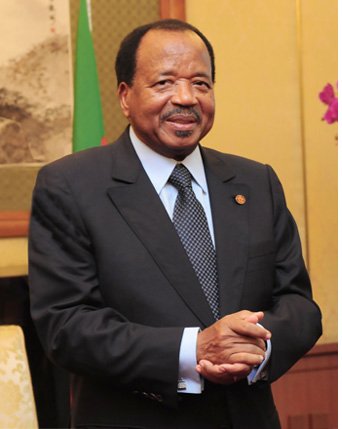
H.E. Paul BIYA
President of the Republic, Head of State
“I call on our youth to seize the numerous opportunities offered by public policies such as the Special Three-Year Youth Plan, multifunctional youth promotion centers, and incubators. It is time to show boldness, innovation, and entrepreneurial spirit.”
“Self-employment remains one of the surest paths to social and professional integration.”
Speech, February 10, 2025
PIFMAS embodies our determination to transform youth into agents of progress: through the creation of micro-enterprises manufacturing sports equipment, we aim to strengthen our economic autonomy, promote local know-how, and create sustainable jobs.
The Prime Minister recalled the need to produce locally in sufficient quantities, restrict imports of goods that can be produced locally, and establish fiscal and customs incentives. This strategic framework is fully embodied by PIFMAS in its support actions for cooperatives and local industrialization.
PIFMAS turns this vision into action: through support, prototyping, and structuring of strong local industrial sectors, we empower youth to transform their ideas into viable projects.
By creating cooperatives and micro-enterprises, this program strengthens our economy's resilience while giving each entrepreneur the opportunity to be an agent of change.
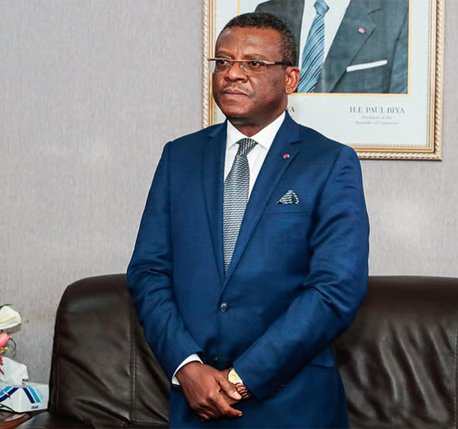
Dr. Chief Joseph DION NGUTE
Prime Minister, Head of Government
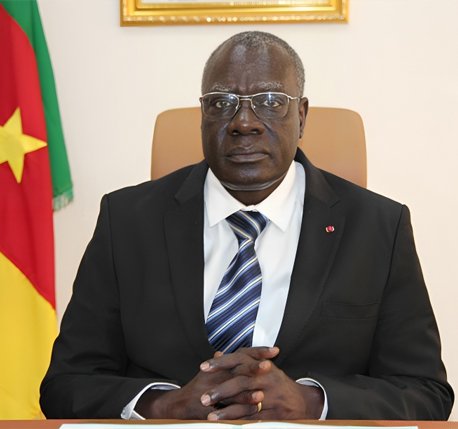
Mr. MOUNOUNA FOUTSOU
Minister of Youth and Civic Education (MINJEC)
“Youth, import substitution, and economic patriotism for the progress of Cameroon.
Our youth must increasingly multiply patriotic actions... by promoting the consumption of local products, supporting national companies and sustainable development, with a spirit of national pride.”
Prototyping centers and cooperative incubators are learning places where you experiment, fail, reinvent yourself, to create solutions adapted to local needs. This setup not only enables you to realize your projects but also contributes to the promotion of our local industries.
This decree establishes the creation, organization, and operation of the Socio-Economic Integration Project for Youth through the Creation of Micro-Enterprises Manufacturing Sports Equipment, abbreviated “PIFMAS” and hereinafter referred to as “the Project.”
Attached to the Ministry in charge of youth, PIFMAS is the operational structure for supervising and supporting youth in creating micro-enterprises manufacturing sports equipment.
Accordingly, it is responsible, in liaison with relevant administrations and bodies and under the direction of internal technical structures of the Ministry in charge of youth:
Youth beneficiaries of the Project must be aged 15 to 35 years, regardless of their educational level.
They must not hold salaried employment in the formal sector.
Pillar of the SND 30 | Structural transformation of the economy |
Objective | Develop manufacturing and service industries |
Industrial domain/sub-sector driving the SND30 | Textile-Confectionery-Leather Development of non-financial services |
Specific objective | Develop an industry for the manufacturing and production of clothing, particularly sportswear (jerseys, tracksuits, sneakers, etc.) Encourage young people to improve their skills in the clothing industry and shoe manufacturing in order to mass produce a certain number of sports accessories (jerseys, tracksuits, tennis shoes, shoes, balls, etc.) for the local market. |
Contribution from PIFMAS | Development of 40 cooperative units for the production of sports equipment Training and development of young people in the sports equipment manufacturing sector |
Pillar of the SND 30 | Development of human capital and well-being |
Objective | Education, training and employability |
Industrial domain/sub-sector driving the SND30 | Quality, employability and entrepreneurship |
Specific objective | Promote a significant increase in the number of young people with the skills, particularly technical and professional skills, necessary for decent employment and/or quality entrepreneurship in the trades of the sub-sectors driving industrialization (cotton, textiles, leather, etc.) Provide training for trainers, strengthen economic patriotism |
Contribution from PIFMAS | Establishment of Sports Equipment Manufacturing Cooperatives Incubation Centers (CICOOPFAMAS) in the 10 regions Setting up its Sports Equipment Prototyping and Manufacturing Centers (CEPROFAMAS) in the 10 regions Training of trainers in the field of sports equipment manufacturing and entrepreneurial coaching Civic, Moral and Entrepreneurial Rearmament (REAMORCE) of young people |
Pillar of the SND 30 | Promotion of employment and economic integration |
Objective | Promote development-oriented policies that foster productive activities, the creation of decent jobs, entrepreneurship, creativity and innovation and stimulate the growth of micro, small and medium-sized enterprises while facilitating their integration into the formal sector, including through access to financial services |
Domain | Promoting migration from informal to formal Creation and preservation of decent employment in large companies |
Specific objective | Consolidate existing jobs and encourage the creation of new, skilled jobs, particularly through public procurement, taxation and business (and staff) upgrading programs Encourage mass migration of workers from the informal sector to Very Small Enterprises (VSEs) in the formal sector Supporting VSEs in terms of taxation and access to microcredit, in order to strengthen the attractiveness of this status Encouraging VSEs to transform into SMEs/SMIs |
Contribution from PIFMAS | Job creation through supported cooperatives Formalization of cooperatives and support Voluntary insurance for cooperative members Development of agreements with federations, clubs and administrations with a view to facilitating access for cooperatives to public procurement |